
 Register


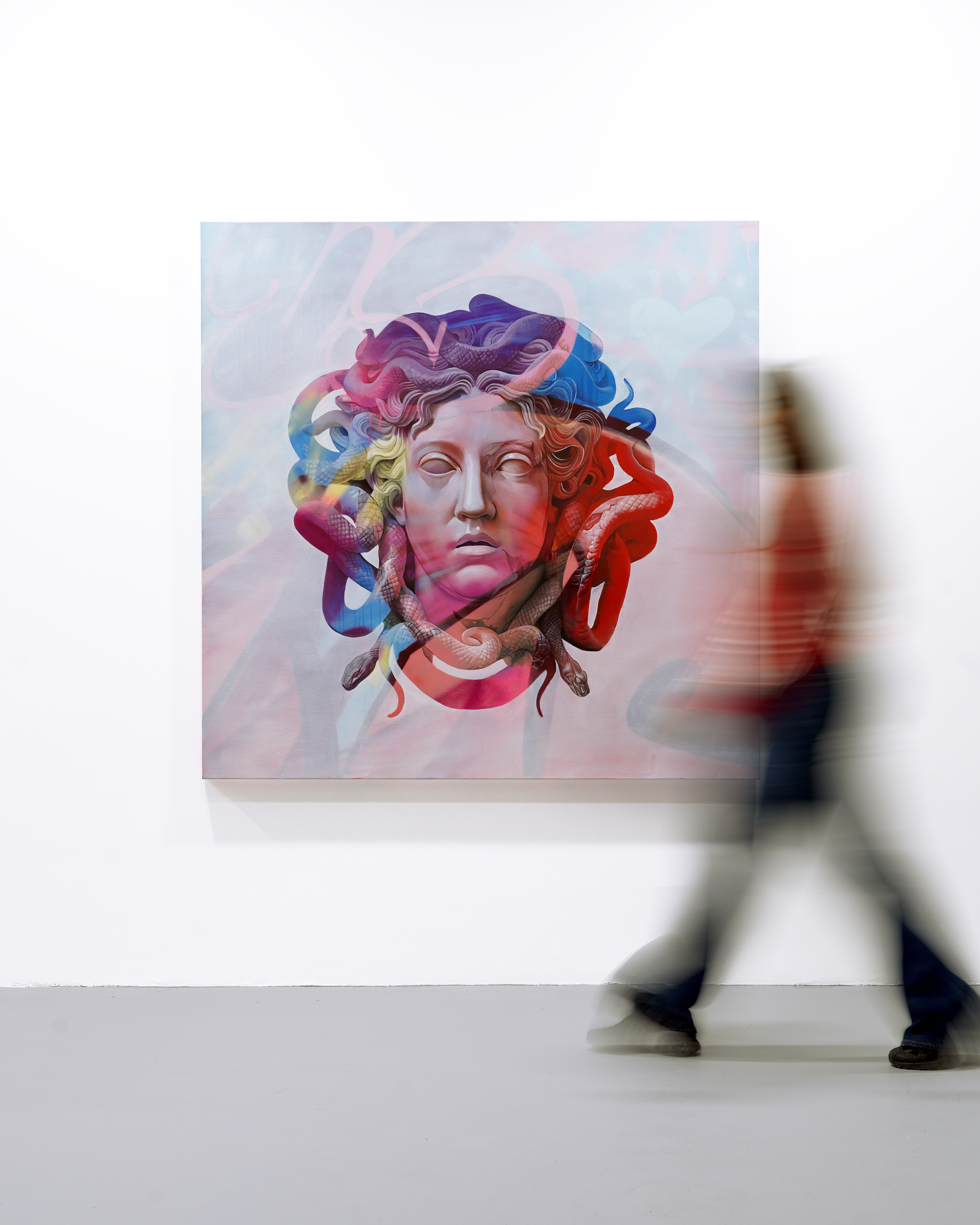
PichiAvo’s visual language emerges from the encounter between two distinct worlds: the monumentality of classical tradition and the visual energy of contemporary graffiti.
The Valencian duo, formed by Pichi and Avo, has spent more than fifteen years developing a body of work that brings together the legacy of Greco-Roman classicism and the spontaneity and intensity of urban visual culture. From this encounter arises what is often described as Urban Mythology, a poetic universe in which gods, heroes and sculptural figures coexist with tags, lettering and vibrant fields of color.
More than a simple fusion of styles, PichiAvo’s work reflects on the relationship between past and present, cultural heritage and urban languages, permanence and transformation.
The three series — Lefkos, Chromata and Orphic Hymn — offer different perspectives on this research, highlighting technical, chromatic and symbolic variations within a consistently recognizable visual language.
Lefkos: When Myth Emerges from Color
The term Lefkos means “white” in Greek and perfectly describes the defining characteristic of this series.
A light veil settles over the surface of each work, softening the visual force of the graffiti and gradually allowing mythological figures to emerge. The result is a subtle balance between presence and absence, in which urban signs do not disappear but recede, making room for the monumentality of the figures.
In Lefkos, the dialogue between Street Art and classicism takes shape through a controlled tension: the visual noise of the city is filtered, allowing myth to re-emerge with renewed prominence.
Chromata: Color as Revelation
If Lefkos operates through subtraction, Chromata explores the power of contrast.
In this series, PichiAvo juxtapose black and white with intense, vibrant colors, creating compositions in which every element gains expressive strength. The chromatic dialogue recalls classical sculpture and its original polychrome nature, which PichiAvo reinterpret through a contemporary sensibility.
Starting from this historical awareness, the artists revisit classicism through a contemporary lens. The process itself becomes an integral part of the work: paint is applied and subsequently removed, revealing hidden layers and creating a stratified surface that retains traces of both time and artistic intervention.
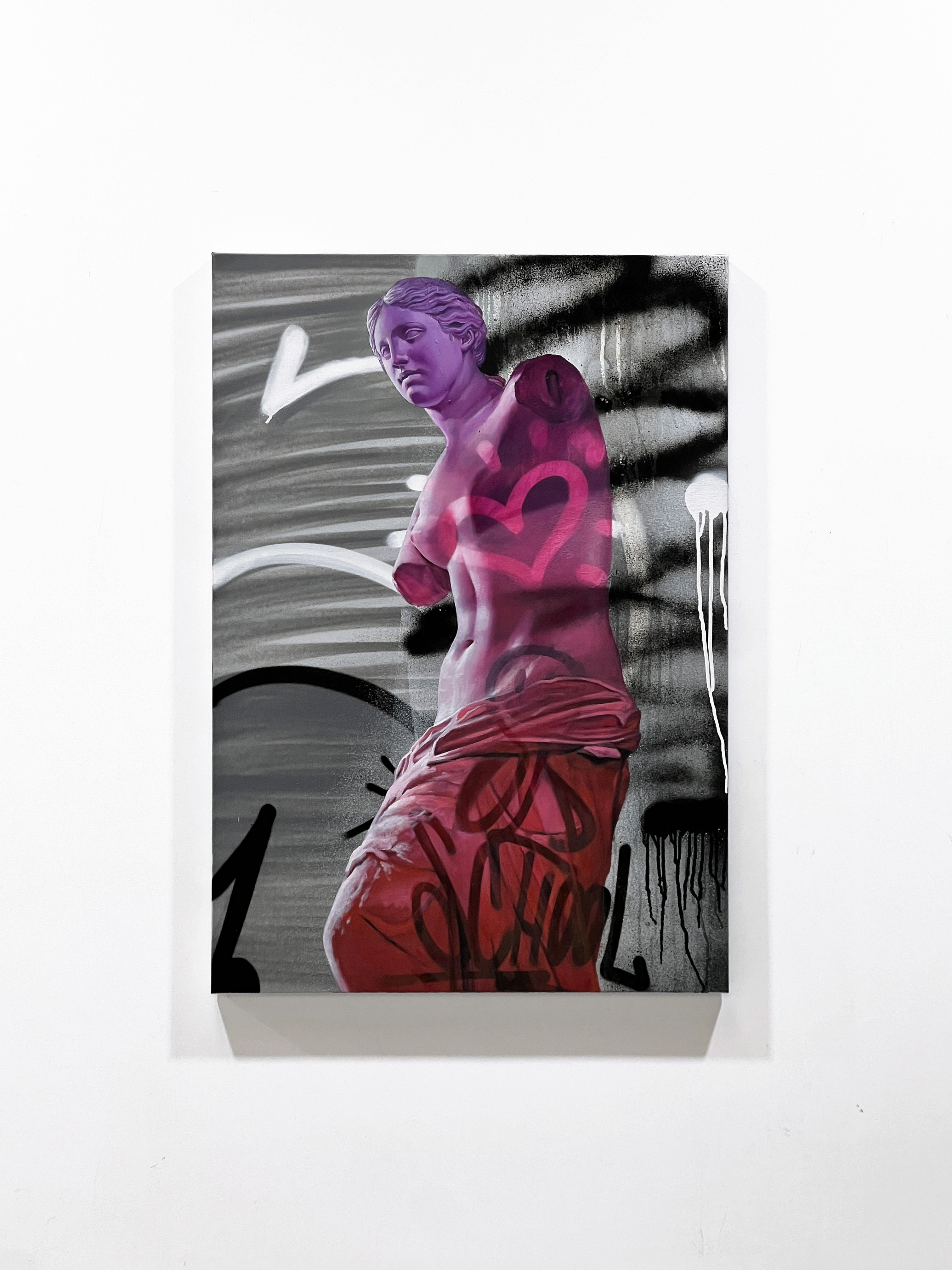 PichiAvo, Venus de Milo Chromata
Orphic Hymn: Mythology as a Contemporary Narrative
The Orphic Hymn series draws inspiration from the ancient Orphic Hymns, poetic compositions attributed to Orpheus and dedicated to the gods of the Greek pantheon.
In these works, the reference to mythology becomes even more explicit. Figures emerge from vivid chromatic fields crossed by tags, marks and direct references to urban culture. The symbolic heritage of the classical world is thus translated into a contemporary language capable of speaking to the present without losing its evocative power.
More than a quotation from the past, mythology becomes a narrative tool through which universal themes can be reinterpreted and new connections established between cultural memory and contemporary imagination.
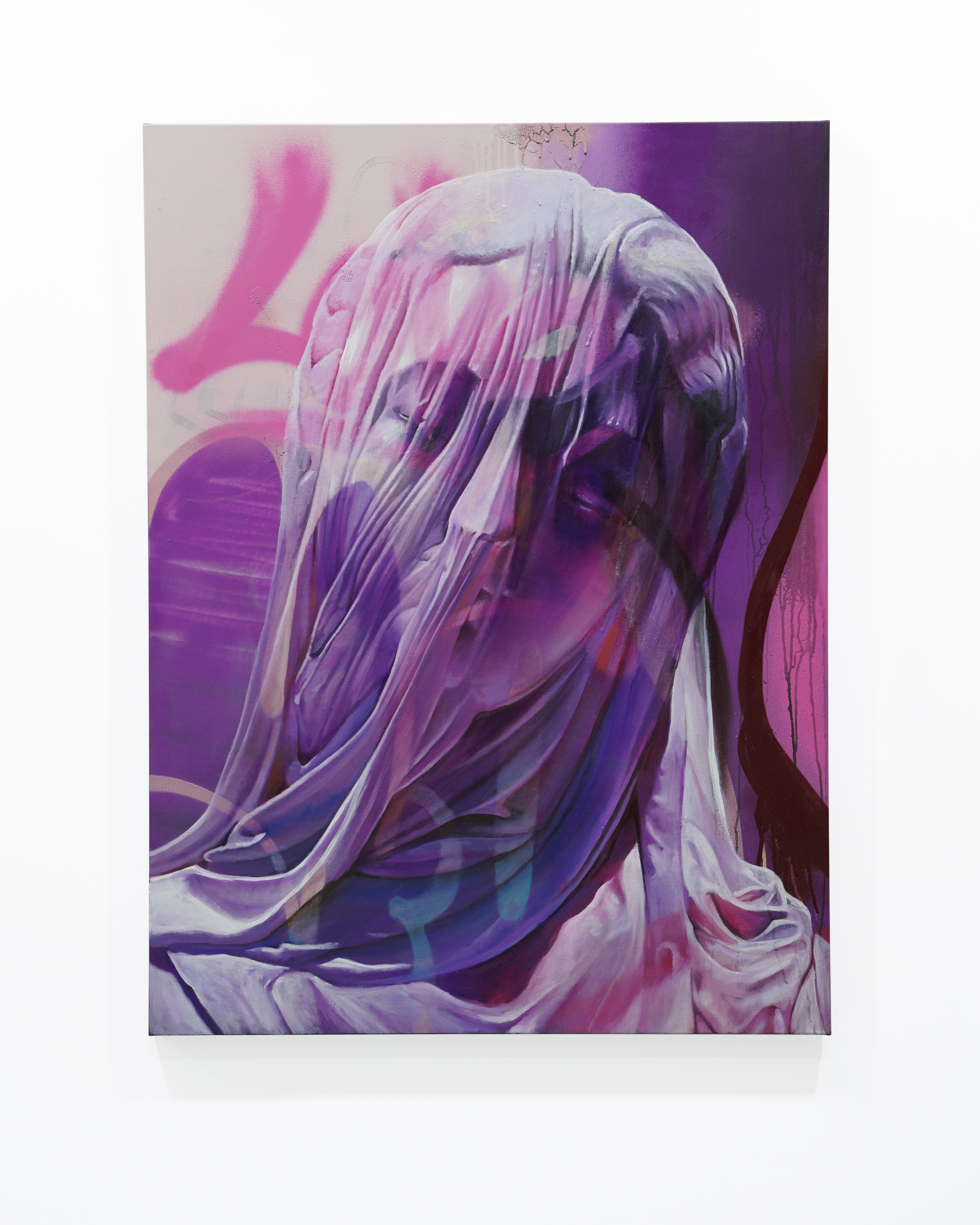 PichiAvo, Orphic Hymn to Modesty II
A Continuously Evolving Language
The three series reveal different approaches, yet they share the same creative tension that characterizes PichiAvo’s entire body of work: the desire to create an ongoing dialogue between seemingly distant worlds.
On one side, the monumentality of classical sculpture; on the other, the immediacy of the urban gesture. On one side, historical memory; on the other, the vitality of contemporary culture.
It is precisely within this balance that the strength of PichiAvo’s work resides. A visual language capable of moving across contexts, materials and formats while preserving a distinct and unmistakable identity.