
 Register


The Exhibition and the Project
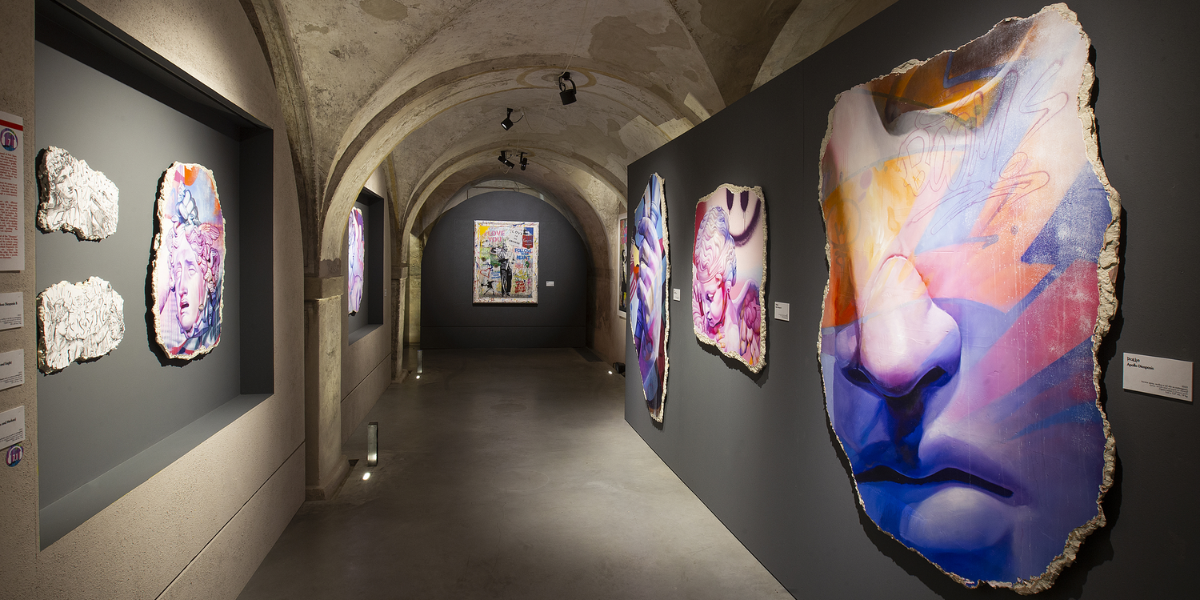
Street Art Revolution is an exhibition project dedicated to the evolution of urban art and its impact on contemporary visual culture, developed within the spaces of Palazzo Tarasconi in Parma. Through the work of artists such as Blek Le Rat, Shepard Fairey (Obey), and other international figures, the project brings together practices and languages that have helped redefine the relationship between art and public space.
As Luca Bravo points out, the project places the viewer “in dialogue with works of great media and thematic power,” conveying the strength of images that have crossed the boundaries between art, symbolism, and virality.
Street Art as an Urban Language and Cultural Phenomenon
Street Art thus emerges as a practice capable of overcoming institutional boundaries, using the city as a space for expression and transforming art into a tool for accessible communication and social and political intervention. In this context, the project retraces the transition from New York subway graffiti to the global spread of urban art as a cultural phenomenon.
Curated by Giuseppe Pizzuto and the Wunderkammern gallery, with artistic direction by Luca Bravo, Street Art Revolution develops as a reflection on the transformations of visual languages, bringing into dialogue different geographical contexts, generations, and approaches.
Artists, Languages, and Visual Transformations
The exhibition path weaves together key figures and moments: from the legacy of pop culture and the reproducibility of images, to urban practices, and the international spread of stencil art and urban languages through artists such as Blek Le Rat. At the same time, the work of Shepard Fairey highlights the relationship between art, activism, and communication, while more recent research expands the field between pop culture, visual experimentation, and cross-influences.
The Complexity of the Phenomenon and the Italian Context
As Giuseppe Pizzuto notes, “around graffiti and tags, posters and stencils, murals and urban sculptures, concepts such as vandalism, legality, advertising, regeneration, art, marketing, communication, urbanism, and decay come into play.” Within this complexity, Street Art Revolution reflects the layered nature of the phenomenon and the impossibility of reducing it to a single definition.
The project also includes a reflection on the Italian context, highlighting the contribution of artists who have developed independent practices within a global network of visual languages.