
 Register


The Exhibition and Add Fuel’s Practice
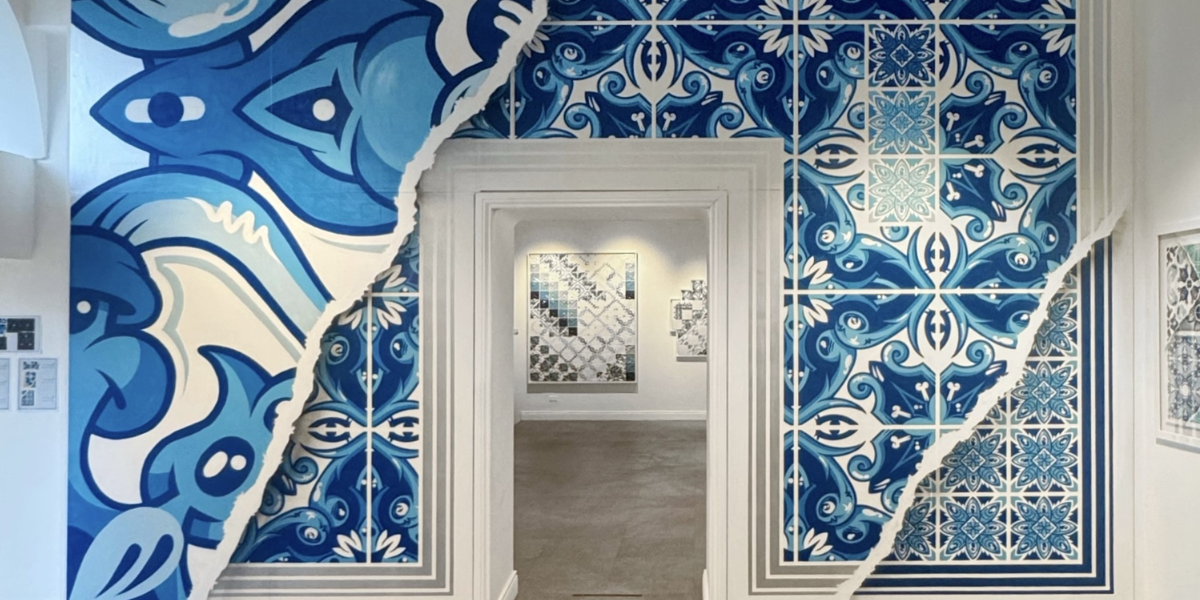
Forma Infinitum represents the first solo exhibition in Italy by Add Fuel (Diogo Machado), a Portuguese artist known for a style that connects tradition and contemporaneity through a visual language based on geometry, color, and ornamentation.
The project develops from the reinterpretation of azulejos, a distinctive element of Portuguese visual culture characterized by symmetrical and repetitive decorative patterns. This heritage is reworked through a contemporary and experimental vision, giving rise to works that redefine the relationship between memory and innovation.
Between Memory, Experimentation, and Visual Language
Forma Infinitum explores the relationship between past and future, showing how artistic forms can evolve without losing their essence. The artist’s work is situated in a space of tension between the familiar and the unknown, constructing a visual language capable of crossing different cultural contexts.
As Add Fuel states:
“Art can simultaneously be an archive of collective memory and a space for experimentation. Mediterranean heritage and my Portuguese roots represent the starting point in my exploration of a culture in constant evolution.”
A Multidisciplinary Project
The project unfolds through a body of works that includes metal sculptures, ceramics, tapestries, and screen prints on paper, highlighting a multidisciplinary approach and the intention to build a bridge between tradition and modernity.
Among the works presented, large-scale pieces such as PATCH: WORKED 09 develop a reflection on modularity and visual perception. The composition, inspired by the patchwork technique, combines hand-painted elements within a structure that generates three-dimensional effects and perceptual plays.
Between Urban Space and Transformation of Language
Add Fuel’s practice moves between the urban dimension and studio production. On one hand, the artist creates permanent works such as ceramic panels and screen prints; on the other, he develops interventions in public space which, despite their ephemeral nature, maintain continuity over time also thanks to the use of durable and restorable materials.
The name Add Fuel derives from the expression “add fuel to the fire”, commonly associated with a negative connotation, but reinterpreted by the artist as an act of activation and creative empowerment, in line with a practice based on transformation and the layering of languages.