
 Register


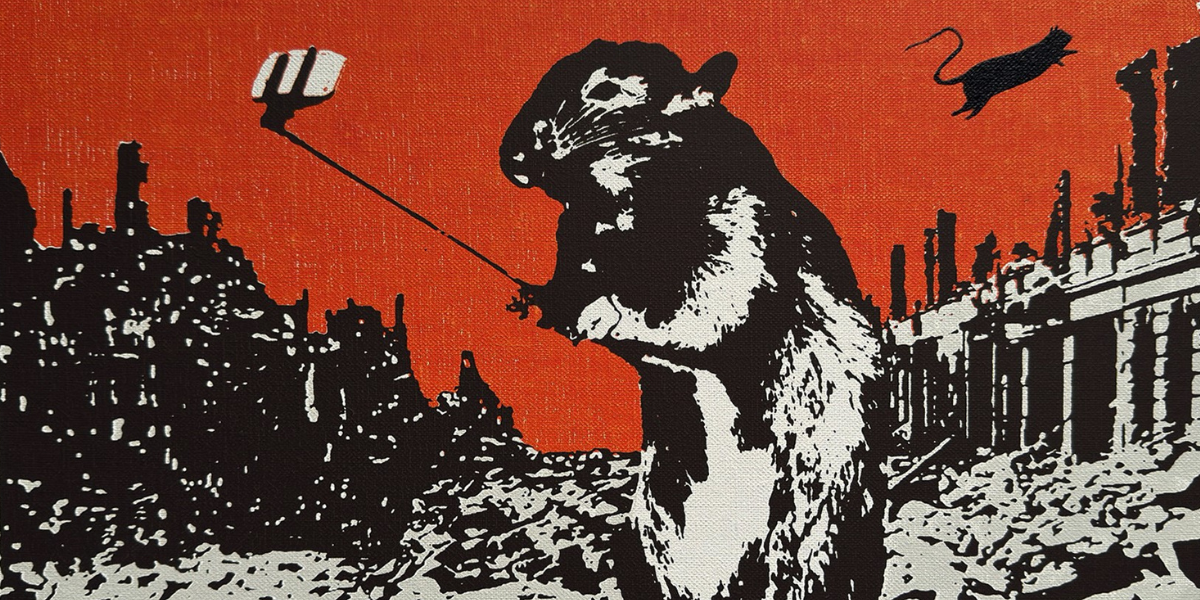
Considered one of the pioneers of international Street Art and the father of stencil art, Blek le Rat has built, over time, an immediate, recognizable visual universe deeply connected to urban space. From his first interventions on the walls of Paris in the 1980s to his most recent works, his language has developed through recurring subjects, symbolic figures, and references to art history, transforming the stencil into a tool capable of bringing together the street, memory, and contemporaneity.
The rat: a symbol of freedom, resistance, and urban art
Among Blek le Rat’s most celebrated subjects, the rat is undoubtedly one of the most iconic, a figure that has accompanied the artist since the beginning of his career. For the artist, the rat is a free animal, present in every city in the world and capable of surviving even in the most adverse conditions. For this reason, it becomes the perfect symbol of an art born in public space: free, resistant, and able to leave its mark on the city.
Over time, Blek le Rat’s rat has become a true icon, capable of taking on different forms and meanings. In Warrior, it holds a rifle in its paws, from which a flower emerges, transforming the contrast between conflict and hope into an immediate and powerful image. In Crooner, on the other hand, the rat becomes more ironic and theatrical, confirming the artist’s ability to turn an urban symbol into an ever-changing character.
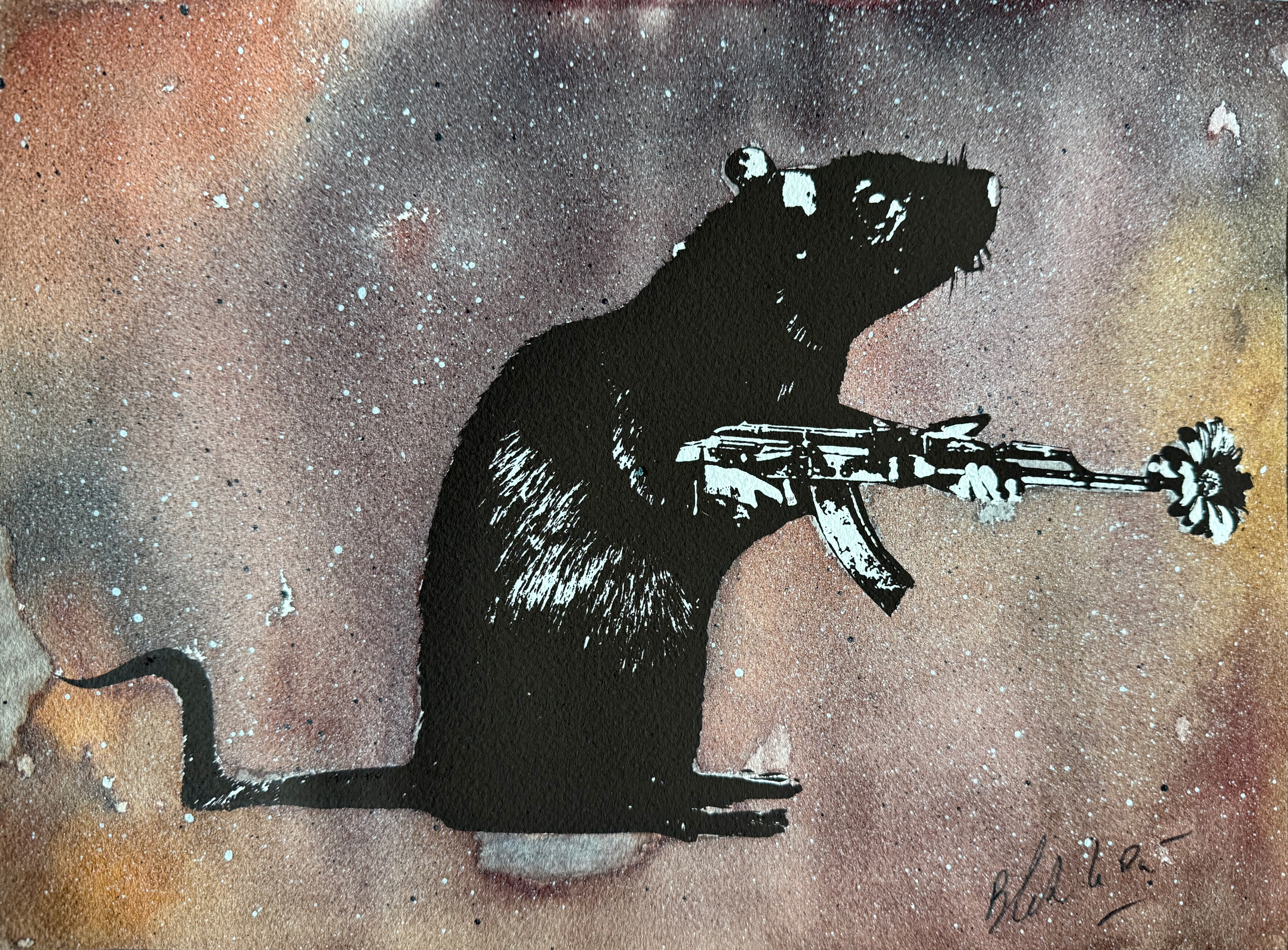 Blek le Rat, Warrior (2026)
The Man Who Walks Through Walls: the traveller who crosses walls
Another iconic subject by Blek le Rat is The Man Who Walks Through Walls, inspired by Marcel Aymé’s famous French short story Le Passe-muraille.
The image depicts a male figure holding suitcases, represented by the artist in several cities around the world: a man who seems to disappear from one wall and reappear on another, symbolically crossing places, borders, and cultures.
Blek le Rat has described this character as a self-portrait. The male figure with suitcases thus becomes a kind of visual alter ego of the artist: an urban traveller who crosses cities, walls, and cultures, carrying the stencil with him as a tool for spreading Street Art.
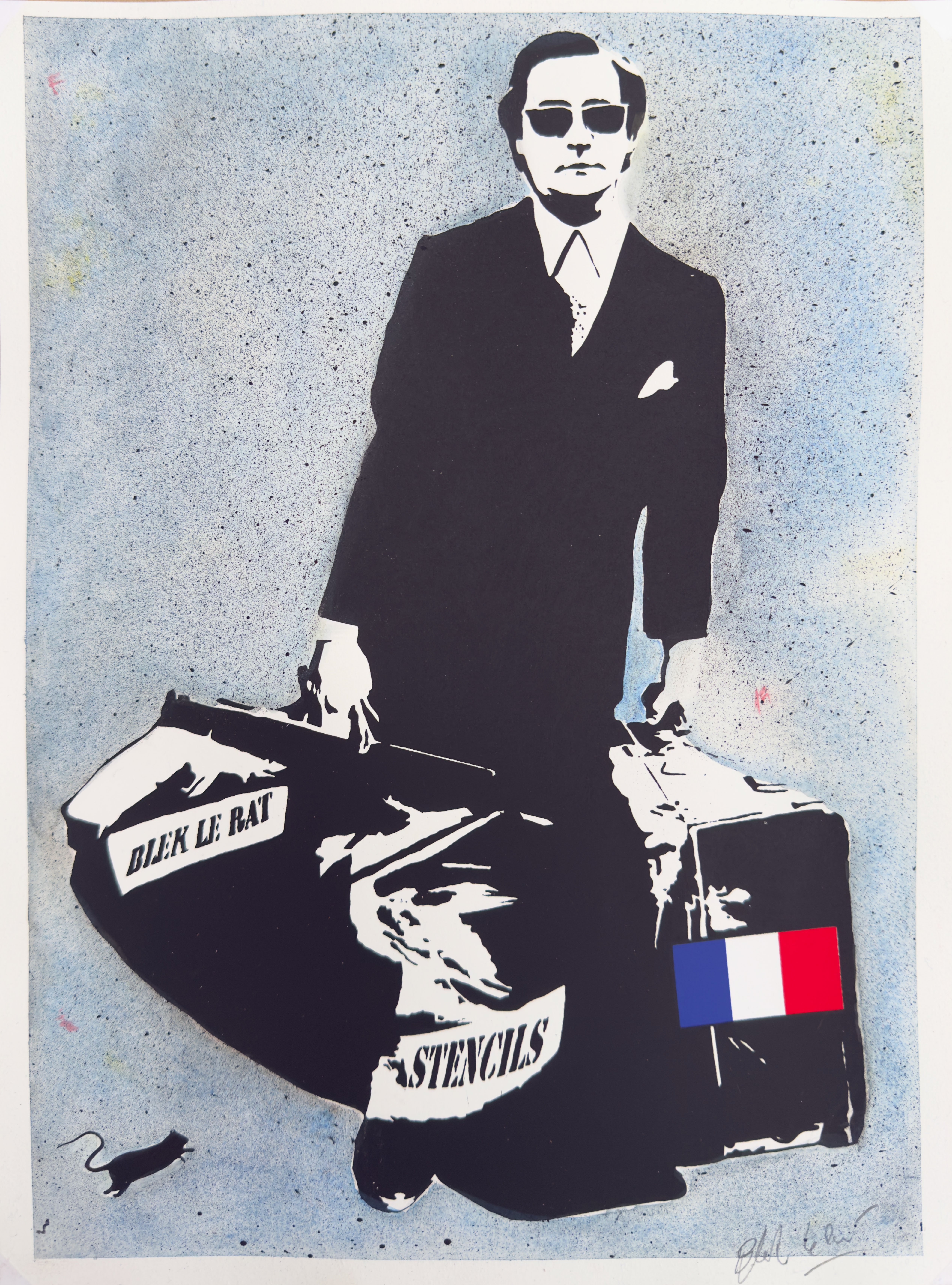 Blek le Rat, The Man Who Walks Through The Walls (2026)
References to art history
Alongside subjects born from the urban universe, Blek le Rat often draws on images and figures belonging to art history. Works such as Mona Lisa or The Lute Player reveal his interest in classical iconography and in the dialogue between past and present.
Through the stencil, historical and immediately recognizable images are reinterpreted through a contemporary language. It is precisely from this contrast that the strength of many of his works emerges: subjects linked to artistic tradition are brought into an urban, direct, and incisive aesthetic. In this way, Blek le Rat creates a bridge between art history and Street Art, making iconic images from the past part of a new visual narrative.
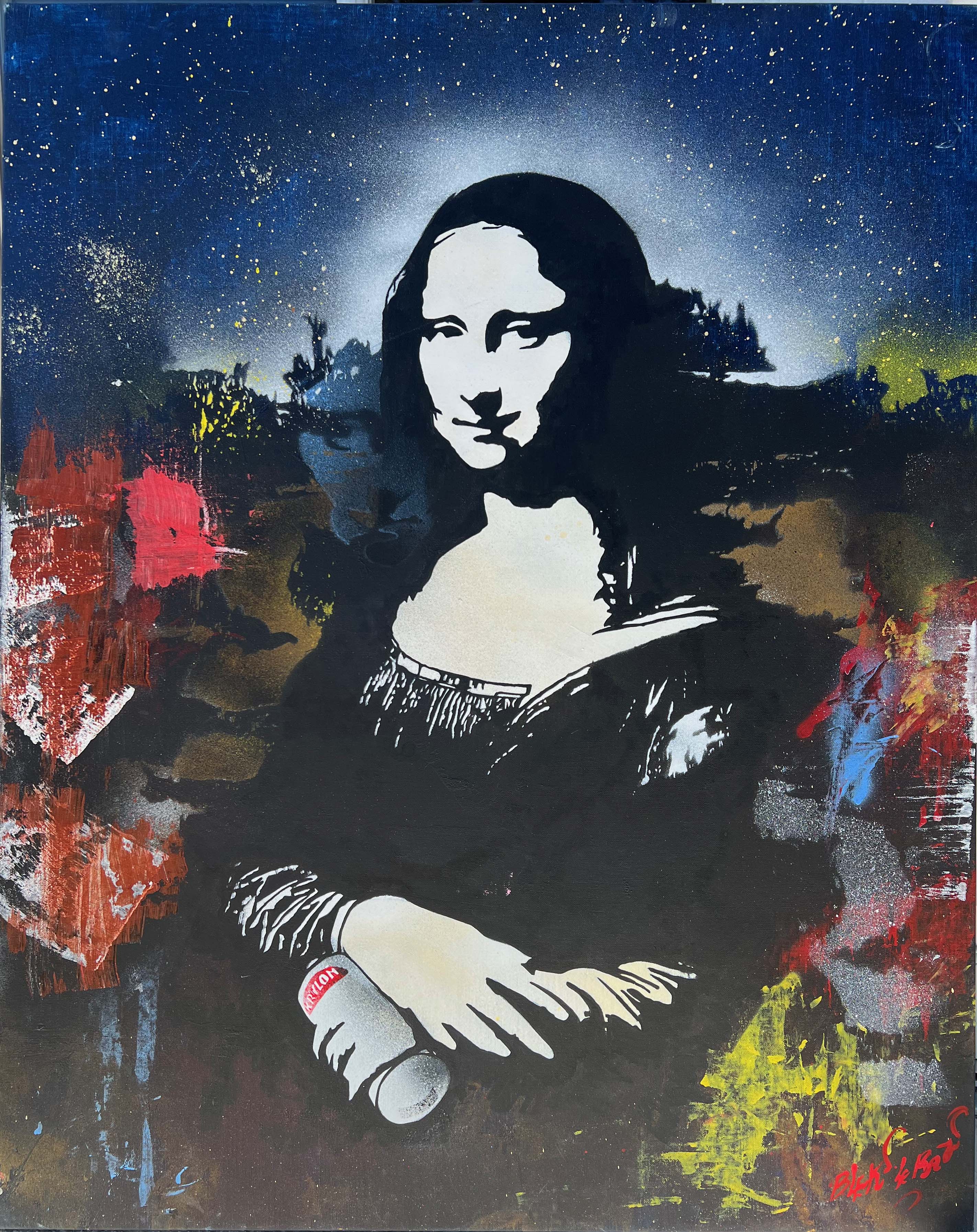 Blek le Rat, Mona Lisa (2025)
The dancers: the body in motion within urban space
Among Blek le Rat’s recurring subjects are also musicians, dancers, and composers, figures that introduce a lighter and more poetic dimension into his imagery. In the dancers, the body in motion becomes the protagonist: dynamic and suspended figures, capable of capturing the fluidity of a gesture in a single instant.
Through the stencil, Blek le Rat transforms the expressive freedom of dance into essential and recognizable images, where the grace of movement meets the direct force of urban language.
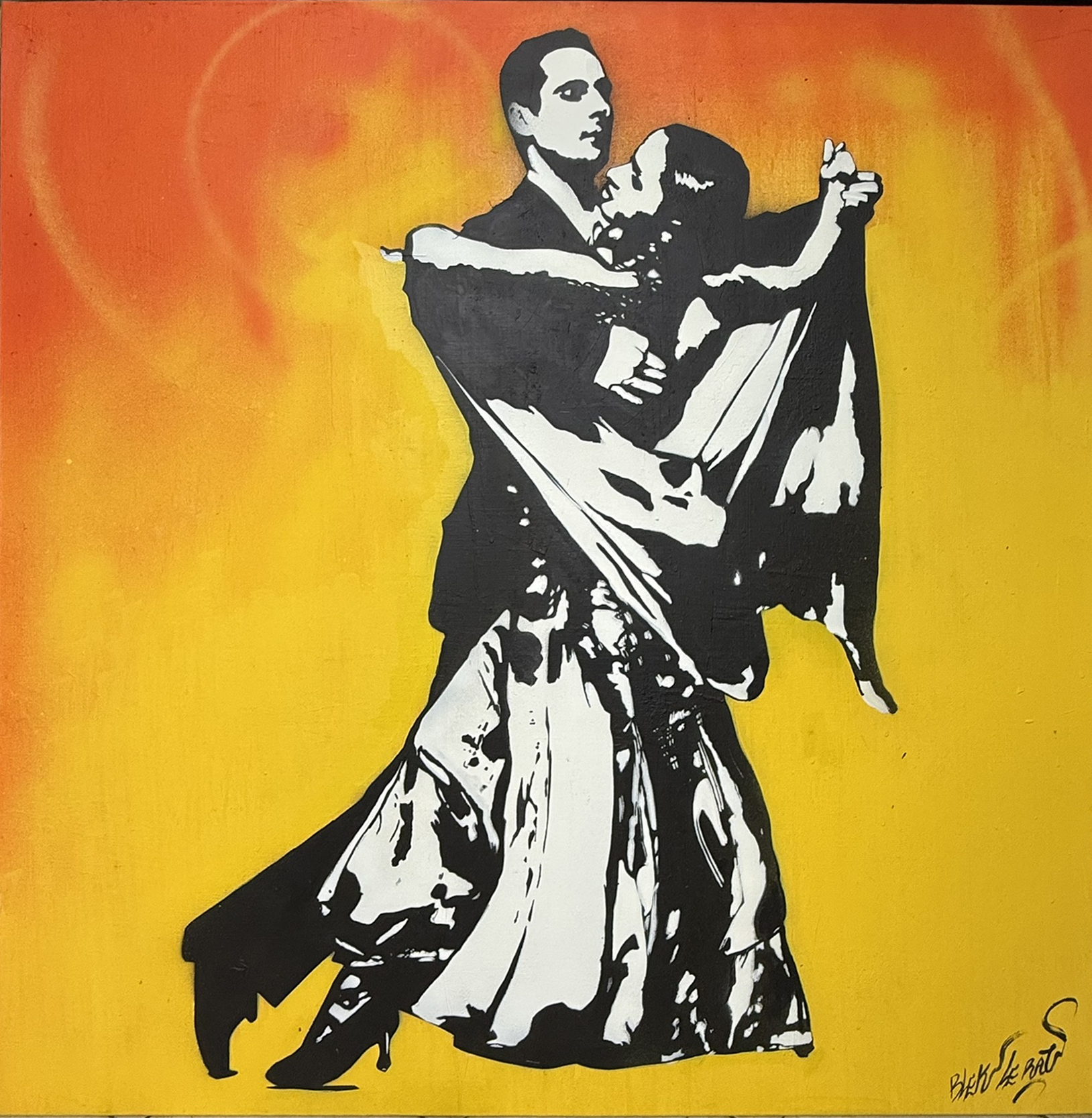 Blek le Rat, Danseurs (2026)
An imagery between street, symbol, and memory
It is precisely in the variety of his subjects that the strength of Blek le Rat’s imagery emerges. The rat, the traveller, the icons of art history, the dancers, and the urban figures all become part of a coherent visual language, made of immediate and recognizable symbols.
Through these images, the artist explores central themes of his research: freedom, resistance, the relationship with the city, and the ongoing dialogue between artistic memory and contemporaneity.