
A New Vision of the Classics in Contemporary Art
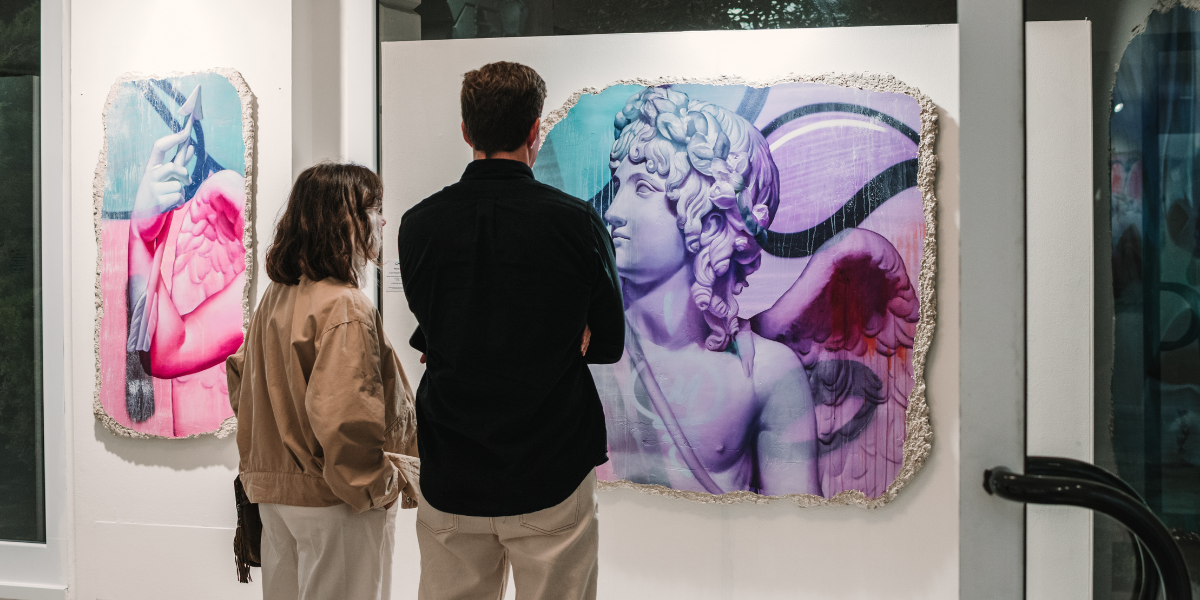
Within the contemporary art landscape, an increasingly consistent line of research is emerging across different languages, markets and contexts: the reinterpretation of classical art as a cultural, aesthetic and narrative tool.
This is not about recovering the past through a nostalgic lens, nor about using quotation as a mere stylistic exercise. On the contrary, the reinterpretation of the classical is presented as a conscious practice, capable of connecting historical heritage with contemporary sensibilities and new forms of artistic production.
The Classical as a Cultural Asset
The classics constitute a shared symbolic heritage, made up of recognisable images, forms and archetypes capable of crossing cultures and generations. In contemporary art, this repertoire is not considered a static body of references, but rather an active material to be reinterpreted in relation to themes such as identity, memory, perception and the transformation of the image.
The work of the Miaz Brothers belongs within this context. They reinterpret the tradition of portraiture through deliberately blurred, unstable figures with no clearly defined outlines. Their reference to the past is never descriptive, but operates through suggestion: the classical is thus transformed into shared memory, perceptual experience and suspended time.
This mode of representation intensifies the relationship between the artwork and the viewer. While retaining a strong cultural recognisability, the images open up further interpretations and call into question the solidity of the face, identity and representation itself.
Tradition and Contemporaneity: An Effective Synthesis
The strength of this tendency lies in its ability to build a bridge between past and present. Classical aesthetics are deconstructed, contaminated and recoded through contemporary languages: spray painting, Street Art, installation and urban culture.
An emblematic example is PichiAvo, a Spanish artistic duo whose practice emerged from the encounter between academic training and graffiti culture.
Their artistic vision is based on the fusion of Greco-Roman art and contemporary urban language, in a combination often described as Urban Mythology. Mythological and sculptural figures, rendered with great technical precision, emerge from vibrant backgrounds composed of tags, lettering and layers of colour.
The classical retains its iconic and monumental power, while being infused with the spontaneous energy of graffiti writing. The result is a visual synthesis in which tradition and contemporaneity do not simply overlap, but create a unified and immediately recognisable language.
Colour plays a central role in their practice, emphasising the symbolic power of the compositions and transforming figures from the classical tradition into dynamic and contemporary presences. Experimentation with different materials also allows the duo to transfer the physicality and impact of the urban mural into the exhibition space, while preserving its connection with the street.
The Classical as a Global Language
Within an increasingly international art system, the reinterpretation of the classics also responds to the need to create an immediately recognisable and transversal language. Historical heritage becomes a shared ground upon which new narratives can be developed.
The work of Blek le Rat, one of the pioneers of international Street Art and a central figure in the development of stencil art, can also be understood from this perspective.
The black rat has become the most recognisable subject in his work. A symbol of freedom, resilience and survival, it represents a presence capable of inhabiting every city and adapting to the most difficult conditions. This symbolic dimension is reinforced by the linguistic connection between “rat” and “art”, linking the animal to the very idea of artistic expression.
Although the rat is the subject for which the artist is best known, his work encompasses a broader repertoire connected to social, political and cultural themes. His artworks often depict marginalised individuals, iconic figures and images of strong visual impact.
Alongside subjects drawn from the urban environment, Blek le Rat also revisits images and figures belonging to art history. Subjects such as the Mona Lisa or The Lute Player reveal his interest in classical iconography and in the dialogue between past and present.
Through stencil, historical and immediately recognisable images are reinterpreted using a contemporary language. It is precisely from this contrast that the power of many of his works emerges: subjects connected to the artistic tradition are transported into a direct and incisive urban aesthetic.
The reinterpretation of images associated with masters such as Leonardo da Vinci, Caravaggio and Michelangelo thus creates a bridge between art history and Street Art. The classical is removed from an exclusively museum-based dimension and returned to public space, becoming part of a new visual narrative that is more accessible and immediate.
Why This Tendency Matters to the Art System
The reinterpretation of the classics addresses several central needs within contemporary art, offering symbolic stability in a context characterised by rapid aesthetic transformation, as well as an iconographic recognisability that is essential to the relationship with the public. This is accompanied by a cultural transversality that is fundamental within an international system, together with institutional potential encouraged by the direct dialogue with art history.
Works situated within this hybrid area are often easier to contextualise, capable of establishing an immediate dialogue with the viewer and of becoming part of broader cultural narratives.
In the work of the Miaz Brothers, PichiAvo and Blek le Rat, the reference to tradition does not restrict experimentation, but becomes the starting point for the development of different artistic languages.
A Key to Interpreting the Future
Reinterpreting the classics today means redefining their significance in the light of contemporary concerns. Above all, it means recognising that innovation does not necessarily emerge from a complete break with the past, but also from the ability to reinterpret what already exists.
For the art system, this tendency is not an ephemeral phenomenon, but a solid interpretative key for understanding some of the most significant trajectories in contemporary artistic production.